
How Much Does CNC Prototyping Cost in 2026? A Buyer's Cost Model
Most buyers price a prototype the way they price a production part, and the number that comes back surprises them. The surprise is not a markup — it is setup economy. A prototype is a single piece that carries the full fixed cost of the order: programming, fixturing, first-piece prove-out, and inspection. A production run spreads those same costs across a thousand pieces, which is why the per-unit price falls by an order of magnitude. The buyer who understands this reads a prototype quote as a proof-of-design investment, not a per-part price, and budgets it accordingly.
What does a CNC prototyping quote actually pay for?
Strip the formatting off a prototype quote and the same lines appear underneath. Read them as the cost of proof, not the cost of metal:
| Line item | What it pays for | Why it is heavy on a prototype |
|---|---|---|
| Programming and DFM review | Reading the drawing, flagging manufacturability issues, generating toolpaths | Paid once, and it is the whole value of the first iteration |
| Setup and fixturing | Chucking, fixturing, tooling layout, first-piece prove-out | A fixed cost that lands entirely on one piece |
| Material | The stock at the grade on the drawing | Small for one piece, unless the grade is titanium or a specialty alloy |
| Machining time | Spindle minutes to make the part | Modest per piece; the setup around it dominates |
| Inspection and documentation | First-article measurement, CMM report, material certificate | Heavier on a prototype because the report is the deliverable |
The line that most buyers miss is the engineering one. A prototype quote is partly paying the shop to read the drawing, find the features that will not work, and come back with changes, which is the cheapest quality control in product development. When a supplier's DFM review catches a tolerance that cannot be held or a datum that does not exist, it has saved you a production-run discovery, and that saving is worth more than the prototype it came with.
Why does the first piece carry the whole setup?
Machining economics run on fixed and variable costs. The setup — the program, the fixture, the tooling, the first-piece prove-out — is the same whether you order one part or a thousand, which makes it a fixed cost. At a quantity of one, the entire fixed cost lands on that single piece. At a quantity of one thousand, it is spread so thin it barely shows. That is why a prototype quote and a production quote for the same part can differ by a factor of ten: not because the shop is pricing prototypes high, but because setup economy is real.
Two buying habits keep this honest. First, quote the prototype and the production tier on the same page from the same supplier, so you can see the fixed cost land once and then amortize. Second, treat the prototype as the anchor for later iterations: the first piece pays for the DFM learning and the program, so the second and third iterations of the same part family should cost measurably less. A supplier that quotes the prototype, the revision, and the production tier together is showing you the whole cost curve instead of its most expensive point.
How much does material choice move a prototype price?
Material moves a prototype quote twice: once as stock, and again as machinability at the spindle. For a single piece the stock cost is small — the bigger line is the machining time, which follows the material's cutting behavior.
Aluminum 6061-T6 is the prototyping default: it cuts fast, holds a clean finish, and its stock is cheap, which makes it the economical choice for form-and-fit prototypes. Where the part needs more strength, 7075-T6 adds it at a modest premium. On the stainless side, 303 is the free-machining workhorse, while 304 and 316 cut slower and 17-4PH adds a heat-treatment step if it is aged. Titanium is the slowest and most tool-wearing of the common prototyping alloys, so a titanium prototype carries a real premium in both cycle time and tooling. As a budgeting range, the same prototype geometry in 304 stainless typically lands at roughly two to four times the aluminum price, and titanium higher still.
The buyer rule is to match the material to what the prototype must prove. For pure geometry, the free-machining grade keeps the iteration loop fast and cheap. For a structural test, the prototype belongs in the production alloy — a test in the wrong material produces confident but false evidence. The material trade for a prototype is close to the production decision, and the aluminum vs stainless decision table works through it on this site.
How much do tolerance and finish add to a prototype?
Tolerance is the steepest part of the machining cost curve, and on a prototype the question is which features deserve it. A feature moved from a general ±0.1 mm to ±0.003 mm can more than double the cost of that feature, because the cutting strategy, the finishing pass, and the inspection all change. On a machining floor, milling and turning hold ±0.003 mm on critical features and precision grinding reaches ±0.002 mm, with capability tracked at Ppk ≥ 1.67 initial — the same numbers production will use.
The prototype discipline is to machine tight exactly where the test depends on it, and relax everything else. If the prototype exists to prove that a locating bore at ±0.003 mm assembles correctly, that bore must be machined to the band — a sloppy prototype makes the test unreadable. But the flange face that will be redesigned next week does not need the tight band, and giving it one spends money on a feature in motion. Mark the characteristics under test on the drawing; that tells the shop where the effort and the measurement go, and keeps the rest of the part on the general block where the price stays low.
How does iteration change the total prototyping cost?
Prototyping is rarely one piece; it is a loop of revisions, and the cost curve across the loop is not flat. The first iteration pays the full fixed cost — programming, DFM, setup, first-article inspection — because it is the one that turns the drawing into a proven process. The second and third iterations of the same part family should cost less, because the program largely carries over and only the changed features need new toolpaths and re-verification.
Two habits make the iteration loop economical. First, bundle related changes into a single revision rather than releasing them one at a time — five small revisions cost five times the stop-and-start of one combined release, because each release re-runs the setup and the inspection gates. Second, plan the prototype phase as a budget, not a single quote: estimate the first piece at full weight, the revisions at a reduced rate, and the production tier where the fixed costs finally amortize. A supplier that prices the loop this way is showing you the real cost of development; one that quotes every revision at first-piece weight is charging you for the same setup repeatedly.
How does quantity interact with a prototype order?
A "prototype" is usually one to a few pieces, and the quantity choice affects the price in a specific way. At one piece, the setup lands entirely on the part. At three to five pieces, the setup spreads across the small run and the per-piece price drops noticeably, which is why buying a few copies of a prototype for assembly testing or customer demonstration is often nearly as cheap per piece as one, once the setup is paid.
The minimum order here is one piece, and a prototype runs on the same machines, tolerances, and inspection as production. That means the single piece is an honest forecast of the production part, not a looser sample made by a different process. When you need more than one copy for testing, ask for the price at your actual quantity — the setup is paid once, and the marginal pieces carry mostly material and machine time, so the per-piece number at five pieces is lower than the number at one.
Why should a prototype quote come with a DFM review?
The design-for-manufacturing review is the part of the prototype price most buyers undervalue, because it is the only line that saves money later. A competent shop reads the drawing and flags the features that will fight production: the tolerance tighter than function needs, the internal corner radius smaller than a standard tool, the deep pocket that will chatter, the datum that does not exist on the part. Each flag is a change you can make while the drawing is still a file, which is orders of magnitude cheaper than discovering it after a production run.
When you send a prototype RFQ, ask for the DFM findings in writing with the quote. A supplier that returns "the drawing is fine" on every submission is not doing the review; one that comes back with three specific changes and the reason for each is doing engineering. The prototype that carries a real DFM pass is the prototype that turns into a production part without a surprise, and that is the strongest cost argument for machining the prototype with production-grade documentation from the start. The services overview on this site describes how the RFQ-to-prototype flow and the DFM review work on this floor.
What hidden costs sit inside a prototyping quote?
The visible lines are half the price; the other half hides in what the quote does not say. A quote that does not itemize the setup has hidden the cost that will reappear on every revision. A quote that absorbs the DFM review into a lump sum has not told you whether the review happened. A quote that prices one material and machines another has hidden the substitution risk. A quote from a shop that cannot name its measurement method has hidden the inspection that will decide whether the prototype proves anything.
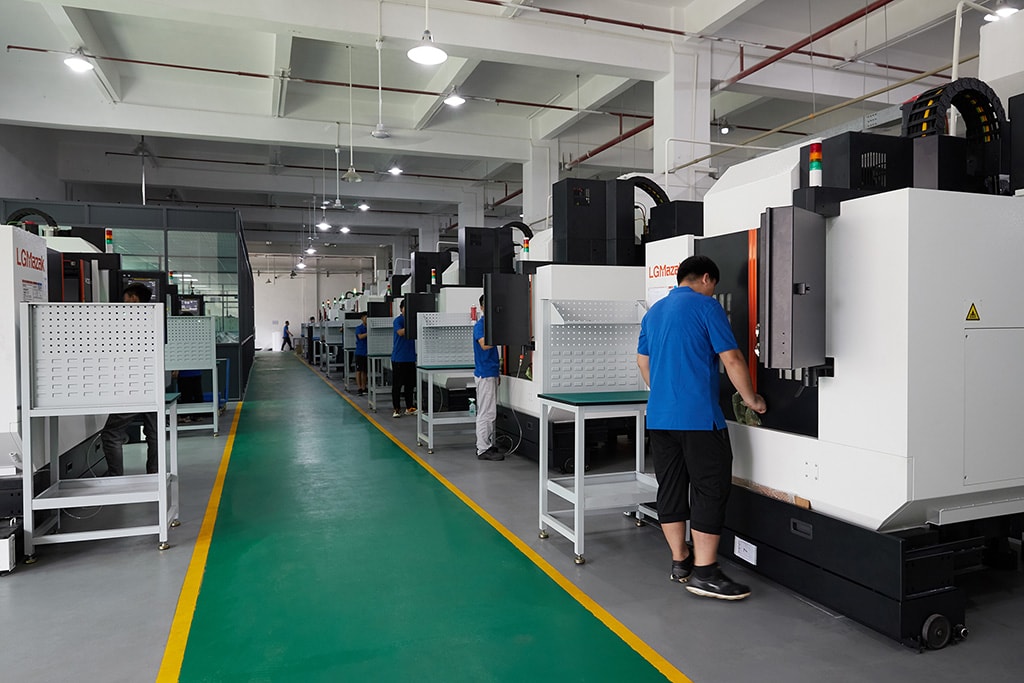
The supplier itself is the largest hidden cost of all. A prototyping supplier that cannot show a sample dimensional report, cannot explain how it verifies a tight feature, or cannot name its quality system is a supplier whose prototype will arrive with the measurement left for you to do. The quality system behind this site is documented on the quality page, and the floor behind the quotes is on the factory page; both are the kind of evidence a buyer should collect from any candidate before comparing prototype totals.
How do you budget a CNC prototyping phase that holds?
Build the prototype budget the way development actually runs — as a loop with a cost curve, not a single line:
- Fix the drawing before it goes out. A complete, toleranced 2D drawing plus a 3D model, with the material grade, the features under test flagged, and the finish named. A clean drawing produces a clean quote, and a clean quote is where overpayment stops.
- Get the DFM review before you fix the number. Send the drawing and let the supplier flag what will not work. Fix the drawing first; then budget the fixed part, not the first draft.
- Quote the first piece, the revision, and the production tier on one page. The first piece anchors the fixed costs at full weight; the revision shows the reduced rate for the iteration loop; the production tier shows where the fixed lines finally amortize. Budget all three at your real quantity, and the prototype phase will not surprise you at the invoice.
Keep the closing rule in front of you: a prototype is a proof-of-design investment, priced by setup economy, and its real value is the DFM learning and the first-article evidence it produces. Read the quote that way and the CNC prototyping budget you build will hold across the revisions that real development always brings.
Frequently Asked Questions
How much does CNC prototyping cost in 2026?
No honest shop quotes a prototype without a drawing, because the price is set by the material grade, the geometry, the tolerance band, and how many features must be proven. As a working budget, a simple small aluminum prototype often lands in the low tens of US dollars to roughly $100, while a complex part in a demanding grade with tight tolerances can reach several hundred dollars or more, because the first piece carries the full setup.
Why is a prototype so much more expensive per piece than production?
Because the first piece carries the full setup, programming, and first-article cost on a single unit, while a production run spreads those fixed costs across the batch. That is setup economy, and it is why a prototype and a production quote belong on the same page from the same supplier.
How can I reduce CNC prototyping cost?
Send a complete, toleranced drawing so the shop does not re-engineer it; prototype in a free-machining grade when the test is only geometric; machine tight only the features the test depends on; and bundle several variants of one part into a single order so setup is paid once.
What tolerance can a CNC prototype hold?
The same as production: milling and turning hold ±0.003 mm on critical features, and precision grinding reaches ±0.002 mm where a sealing or seating surface demands it, with capability at Ppk ≥ 1.67 initial. A prototype machined tighter than the test needs is simply spending money.
What is the minimum order for a CNC prototype?
One piece. A single prototype runs on the same machines, tolerances, and inspection as production, so the part you validate is the part you will scale.
Does machining several prototype iterations cost the same each time?
No. The first iteration pays for programming and the DFM learning; later iterations of the same family pay less because the setup and the program largely carry over. Budget the first iteration at full setup weight and revisions at a reduced rate.
Should I prototype in the production alloy or in a cheaper one?
It depends on what the prototype must prove. For form, fit, and assembly, a free-machining grade such as 6061-T6 or 303 stainless proves the geometry cheaply. For structural, thermal, or fatigue behavior, the prototype must be in the production alloy, because a test in the wrong material produces confident but false evidence.
What documents should a CNC prototype ship with?
A material certificate where traceability matters, a certificate of conformity against the drawing revision, a dimensional report mapping the GD&T callouts to measured values, and surface-finish data on the surfaces the test depends on.
Want a CNC prototyping quote you can budget a whole phase around?
Send the model, the drawing, the material, and the quantity to [email protected] or call +86 13126536955. You will get a DFM review and an itemized quote with the first-piece, revision, and production tiers on the same page.