
How to Choose a CNC Prototyping Supplier Online in 30 Minutes
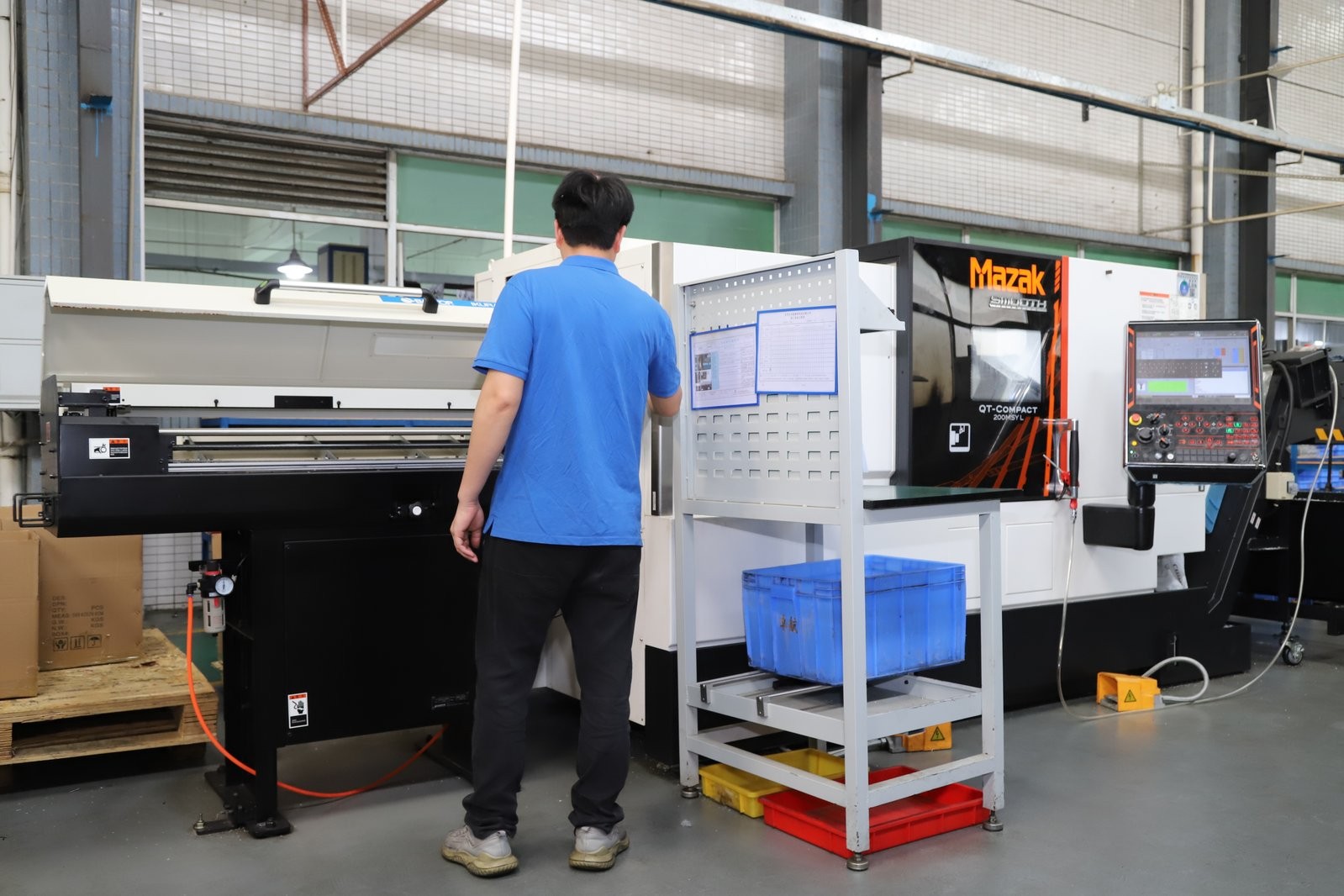
Prototyping is where the quality of a machine shop shows first, because a prototype order is short, fast, and full of judgment calls, which tolerances to hold, which material to use, whether the drawing can be machined at all. A thirty-minute screen on a supplier's website, followed by one well-designed test quote, removes most of the risk before you commit a real program. This guide runs that screen in order: what to check in the first ten minutes on the site, how to test a shortlisted shop with a prototype drawing, how to read the quote when it lands, and which red flags end the conversation.
What can you actually verify about a prototyping shop from its website?
A website cannot prove a shop will machine your prototype on time, but it can prove how the shop thinks, and that is what fails first. Read the capability statements the way you would read a drawing: look for numbers and boundaries, not adjectives. A credible prototyping shop states its tolerance band plainly — on this site that is ±0.003 mm for milling and turning, ±0.002 mm for grinding, with Ppk ≥ 1.67 at the initial study on key characteristics and Cpk ≥ 1.33 on general characteristics. Capability is reported per characteristic: every report names the feature, its tolerance band, the sample size, the sigma method, and the study window., and says how it verifies parts, with CMM reports mapped to GD&T callouts rather than a caliper tick.
Prototyping adds two things to look for on the site. First, process range: does the shop describe machining as the core and name the processes it runs — milling, turning, grinding — or does it gesture at "prototyping" as a generic service with no process behind it? Second, the iteration story: a prototyping shop that talks about DFM review, drawing revisions, and first-article verification understands that a prototype is the first step in a loop, not a one-off delivery. A site that only sells speed — "prototypes in days, no questions asked" — is selling the part of the job that is easy.
The first ten minutes: a screen you can run on any site
Keep a checklist and run it in the same order every time — consistency is what makes the comparison fair. First, the process claim: is machining the actual process, stated with the geometry it is good at? Second, the numbers: tolerances, materials, and inspection should be concrete and internally consistent. Third, the quality system: named standards with a stated scope — ISO 9001:2015, IATF 16949:2016 and ISO 14001:2015 — rather than a logo with nothing to check. Fourth, the contact: a real email address, a real factory address, and an engineer's name attached to the responses rather than a faceless sales inbox.
Two prototype-specific details belong in the same first pass. Look at the material list — a prototyping supplier that names the alloys and polymers it actually machines, and can tell you which ones cut fast and which drive the schedule, understands that material choice is a lead-time decision, not just a cost line. And look for a stated MOQ and lead-time structure: a 1-piece MOQ and delivery tiers tied to complexity rather than a blanket promise tell you the shop is built for the one-off-and-iterate rhythm of prototyping, while a shop that talks only in production volumes is a production shop wearing a prototype label.
Fifth and most telling for prototyping, the verification story: does the shop say what ships with a prototype — a CMM report mapping the callouts, a material certificate, surface-finish data? A shop that describes its paperwork before you ask is a shop that already treats verification as part of the product. On this site, the quality page describes the inspection practice, and the parts page shows the geometry the floor produces. Ten minutes on those pages tells a buyer more than an hour of browsing a marketplace listing.
How do you test a shortlisted shop without spending real money?
The website screen narrows the list; the quote test selects from it. Send the same small, genuinely representative part to two or three shortlisted shops — one with a tight feature, a material you actually use, and at least one GD&T callout the shop has to interpret. Include a STEP or IGES model, a 2D PDF with the material grade, tolerances marked on the characteristics that matter, and a target date. Make the part small enough to quote free or cheaply, but real enough that the response reveals how the shop works.
Then watch what comes back before the price. A serious prototyping shop responds with questions or DFM notes — a datum it would relocate, a tolerance it would tighten or relax, a wall it would not hold in that material, a revision-control question — because it read the drawing and thought about making it. A shop that returns a number with no questions either did not read the drawing or does not know what to look for, and both are disqualifying for prototype work where the drawing is provisional and the judgment is the product. Response time matters too: a prototyping supplier that takes ten days to answer a one-week quote request is telling you its lead-time promises are fiction.
How should you read the quote when it arrives?
Judge the quote on structure, not just the number. A useful prototype quote names the operations — machining steps, any grinding, finishing — so you can see what you are paying for. It separates material, machining, and finishing. It flags the tolerance and capability decisions: which features it will hold at ±0.003 mm, where it recommends grinding at ±0.002 mm, and where it pushed a callout back to the drawing with a reason. For a prototype, the quote should also address iteration: how a drawing revision is handled mid-order, because the prototype almost always changes.
Delivery should be stated as a date or a tier tied to the work content, not a slogan — simple prototypes run on a faster tier than parts with many operations or finishing. MOQ matters the same way: a 1-piece MOQ means you can machine and verify a single prototype before committing any volume, which is the entire point of prototyping. And the quote should state what documentation ships with the prototype. If the CMM report is not in the quote, it is not in the price, and it will not be on the crate.
Which certificates matter for a prototyping supplier, and how do you check them?
For a machining supplier, the certificates that matter are the ones that describe the operating system. ISO 9001:2015 covers the quality management system — the documented control of processes, inspection, and corrective action. IATF 16949:2016 layers automotive supply-chain requirements on top, and ISO 14001:2015 covers environmental management. A shop that holds all three and states them with certificate numbers you can verify with the registrar is running a managed operation; a shop that gestures at "certified" without a standard or a number is not giving you anything you can check.
Check the scope, not just the logo — some certificates exclude design, some exclude processes, and the scope line tells you what the system covers. If your eventual production chain demands a sector standard such as AS9100 or ISO 13485, note that those are requirements imposed by specific supply chains and state them in the RFQ so a prototyping supplier can confirm or decline honestly. The certificates are a floor, not a ceiling: the real proof is the inspection evidence the shop produces on the prototype, which is why the quote test matters more than the logo wall.
Which red flags should end the shortlist immediately?
Some signals are worth acting on the moment you see them. A shop that promises every material, every tolerance, and every quantity with no boundaries is not a precision shop — precision is the discipline of saying what you can and cannot hold. A site with no physical address, or an address that does not survive a map check, is not a factory you can audit. A quote with no engineering questions on a drawing that carries real GD&T means the drawing was not read. A delivery promise with no process logic behind it will break exactly when your prototype is complex.
Two red flags are specific to prototyping. If a shop treats a drawing revision as an annoyance rather than a normal event — no revision control, no confirmation of what changed — it is not built for the iteration loop a prototype lives in. And if the shop quotes a prototype with no verification mentioned at all, it is planning to ship you a machined sample, not a prototype you can test with confidence. Both signals are visible in the first exchange, and both should end the shortlist for parts whose whole purpose is producing trustworthy evidence.
What separates a CNC shop from a prototyping partner in the first order?
In the first prototype order, the difference shows in three places. The first is the response to the drawing: a partner reads the GD&T and tells you which callouts are buildable, which datum scheme will fight the fixture, and which material will behave differently than the model assumed — before the part is cut, not after. The second is the inspection evidence: a partner sends a CMM report mapped to the callouts, a material certificate, and the surface-finish data without you having to argue for them. The prototyping services page on this site describes how that flow runs.
The third is revision handling. A prototype is provisional by definition, and a partner treats a drawing change as part of the job: it confirms the revision, checks which features are affected, and tells you what that does to the schedule and the price before machining rather than after delivery. That combination — engineering judgment on the drawing, real documentation on the part, and clean revision control through the loop — is what the thirty-minute screen is ultimately looking for. It is also the best predictor of how the same shop will behave when your program reaches production.
What should you do after the first prototype to lock in a good supplier?
The first prototype is a test; the second is a relationship, and the difference is your own follow-through. Review the CMM report against the drawing callout by callout rather than as a pass/fail. Log what the prototype taught you — the tolerance that moved, the datum that changed — and send the updated drawing back with the learning attached, so the next iteration starts from the previous one's evidence. And feed the failures back: the shop that treats a non-conformance as a root-cause investigation rather than a remake is the shop that will be better on your third prototype than on your first.
Finally, build the documentation expectation into the order, not the conversation. Put the CMM report, the material certificate, and the revision log on the PO so they arrive with the prototype by default. For the questions buyers raise at this stage — lead-time tiers, GD&T verification, MOQ, and how a prototype flows into a production run — the FAQ page on this site answers them directly, and the contact page puts you in front of the engineer who reads the drawings.
Keep the learning loop running between orders, and the screen you ran in thirty minutes turns into a relationship that makes the next program cheaper to start.
Frequently Asked Questions
How can I verify a prototyping supplier's quality claim before sending a drawing?
Run the thirty-minute screen: check that capability statements carry numbers and boundaries, that certificates are named with standards you can verify, that a real engineer is attached to the contact, and that the shop describes the documentation that ships with a prototype. Then test the shortlist with one real RFQ and judge the questions and DFM notes that come back.
What tolerance should I ask a CNC prototyping supplier to hold?
Ask what it holds as standard and what it verifies. A credible answer is ±0.003 mm for milling and turning, ±0.002 mm for ground features, with Ppk ≥ 1.67 at the initial study on the key characteristics your drawing marks. Then ask how those numbers are measured and reported — the inspection method is half of the tolerance story.
Should I judge a prototyping supplier on speed or on engineering?
On engineering first, because a prototype that arrives fast without verification is a sample, not evidence. A partner reads the drawing, flags the buildability issues, and ships the CMM report with the part, and that discipline, not the speed of the first delivery, is what predicts a smooth production run later.
What should a prototype quote include to be comparable?
The operations named, material separated from machining and finishing, tolerance and capability decisions flagged, a delivery date tied to work content, the revision-handling policy, and the documentation list that ships with the prototype. Quotes that lack structure are not comparable, and comparing them is how buyers end up choosing on price alone.
Is a supplier without AS9100 or ISO 13485 disqualified for prototype work?
Not automatically — those standards are requirements imposed by specific supply chains. If your program chain demands them, state it in the RFQ and let the supplier confirm or decline honestly. A shop holding ISO 9001:2015, IATF 16949:2016 and ISO 14001:2015 can serve most prototype work; the sector standard matters when the prototype feeds a chain that requires it.
How important is a physical factory address when choosing a prototyping supplier?
Very. A factory you cannot locate is a factory you cannot audit, and auditability matters more at prototype stage because the same supplier is usually being evaluated as a future production partner. Confirm the address independently, and treat a site that hides its location as a disqualifier.
What documents should I require with the first prototype?
Put them on the PO: a CMM report mapping the GD&T callouts to measured values, a material certificate with the heat number, and the revision log naming the drawing state the prototype was built to. Those three tell you whether the prototype produced evidence you can build on.
Run the screen, shortlist this shop, and want to test it with a real prototype drawing?
Send the model, the 2D drawing, and the test intent to [email protected] or call +86 13126536955. You will get back the DFM read, the tolerance and process notes, the delivery tier, and the documentation list — the way a prototype quote should look when a supplier reads your drawing.