
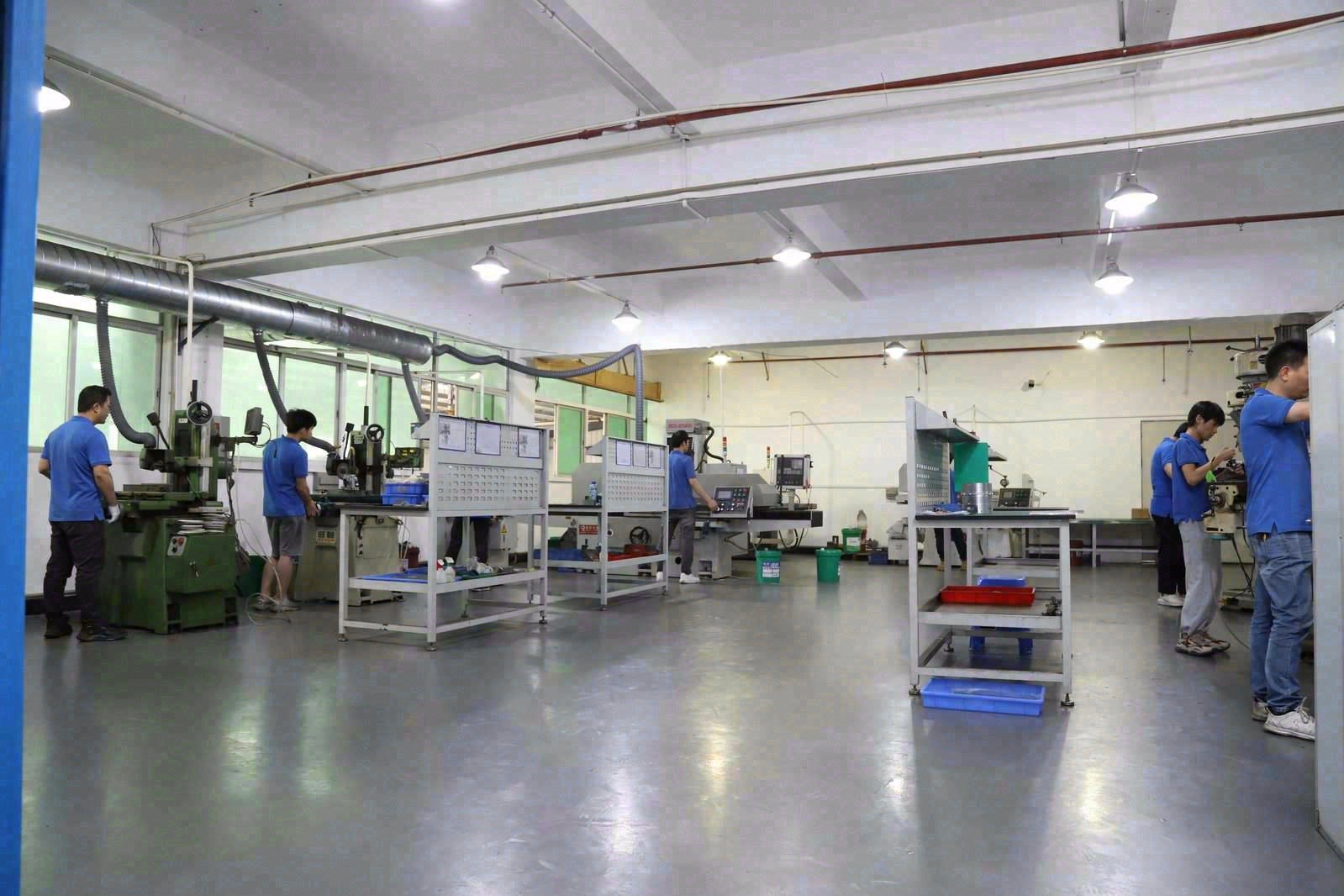
Medical device development moves in stages — concept samples, bench testing, animal or clinical work, then production — and at every stage machined parts carry the design forward. What developers often miss is that the documentation is also moving, from the first prototype onward. The grade tested on a sample, the revision validated in a trial, and the measuring approach proven on a prototype are the exact records that production will be asked to produce at scale.
Why should the documentation file start on the first sample?
The first prototype is where the file's foundations are laid, whether or not anyone intends it. The material selected for the first sample, the drawing revision it was machined to, and the measurements taken to confirm it are the earliest evidence about the design, and later records will be judged for consistency with them. A file that starts at production is a file missing its first chapters; a reviewer looking at the production lot record will want to know which revision was validated, and the answer lives in the prototype stage.
The practical cost of starting late is reconstruction. When the file begins at production, somebody has to recreate the material decisions, the revision history, and the rationale for design changes from memory and email, and memory is a poor archive. Starting early costs little — a certificate filed with each sample order, a revision noted on each drawing — and it turns the file into an accumulation instead of an archaeology project. The prototyping discipline on this site's services page treats the document trail as part of the service, which is the arrangement a medical program should insist on from the first order.
Which documentation matters most before production exists?
Three kinds of records carry the weight during prototyping. First, material evidence: for every grade that is tested, the certificate or material identification that says what the metal was, because a test on an unknown alloy is a test whose meaning cannot be recovered. Second, dimensional evidence tied to a revision: measurements that name the drawing revision they validate, so the data can be attributed to the right design. Third, a revision history: a simple record of what changed between samples and why, because the reasons behind design changes are the most expensive knowledge to reconstruct and the cheapest to record.
None of these needs to be elaborate at the prototype stage. The material certificate is a document that already exists with the metal; the dimensional evidence is a report that is already taken; the revision history is a log that takes minutes to maintain. The discipline is in keeping them, tying them to revisions, and filing them where the production file will find them. Prototypes that generate records as a by-product are the ones whose development file assembles itself; prototypes that generate only parts leave the file to be built later from memory and guesswork.
The same logic applies to the measuring evidence from early samples. A prototype measured to check a single critical dimension needs that dimension recorded with the instrument used, because the next iteration will be compared against it. When iterations are compared honestly, the file shows the design converging — each version measured the same way, against the same standard — and convergence is precisely the evidence a device review is looking for when it asks whether the design was developed systematically.
Should every prototype carry full certificates?
The answer follows the purpose of the sample. A prototype intended for bench testing, animal work, or any evaluation whose results will influence the design should carry identified material with its certificate on file, because the test is only interpretable if the tested material is known. A sample built purely to check geometry, fit, or assembly sequence may run on lighter material evidence, since nothing about the test depends on the alloy's certification. The rule is decided by what the sample will be used for, and it should be stated before the sample is ordered rather than reconstructed after the test results arrive.
There is a middle case worth noting: when a prototype tests a property that depends on material — strength, corrosion, cleanability — the material record belongs with the test record, permanently. If the same property is later validated on production material, the file should show both, so a reviewer can see that the prototype evidence and the production evidence describe the same material or can explain the difference. The discipline is attribution: every test result in the file should be able to name its material, its revision, and its date, because a result that cannot be attributed is a result that cannot be defended.
How does the revision trail protect the whole file?
Every revision in a medical development program is a fork in the documentation, and the file has to record which side of the fork each piece of evidence belongs to. A dimensional report taken on revision two is evidence about revision two; if the design changes to revision three, that report no longer describes the current part, and the file should say so explicitly rather than letting the reader assume. The revision trail is what allows the file to contain evidence from many iterations without becoming a tangle of undated claims.
The mechanics are simple: name the revision on every order, every report, and every test record, and keep a one-line log of what changed and why. The log does not need engineering prose; it needs enough to answer the question an auditor will eventually ask — why does this dimension differ from the drawing before it? Designs change in medical development for reasons that are usually well documented in meeting minutes and poorly documented in the part file. Moving the reasons into the part file, next to the changes, is what turns a stack of revisions into a coherent design history.
What changes when prototyping becomes a pilot run?
The transition from prototype to pilot is a change of emphasis: the design is being proven, so the process must be proven too. The pilot adds the production controls that prototypes did not need — a first article against the approved revision covering every characteristic, capability data on the critical features, and lot records that tie the material, the machine time, and the inspection to the finished batch. The material evidence firms up to production grade, with the certificate route confirmed and substitution rules written. The pilot is where the accumulation of the prototype stage is converted into the operating system of production.
The conversion is deliberate, not accidental. Before the pilot runs, the revision must be frozen and approved, because a pilot run against a moving design produces evidence about no version of the part. The measuring approach proven on prototypes should be carried into the pilot's first article, and the formats of the production reports should be agreed before the pilot rather than after it. A pilot that inherits the prototype's revision discipline and adds production controls is a pilot whose file is ready for the next stage; a pilot that starts the documentation over is a pilot that has thrown away the file's first chapters.
How does a prototyping supplier support the medical file?
A prototyping supplier supports the medical file by documenting as it goes, which is a service attribute rather than a document attribute. That means certificates available on request and filed with the order, reports that reference the drawing revision, material conversations that name grades and conditions instead of offering "equivalent" substitutes, and a clear statement of the measuring instruments used on each report. A supplier that treats documents as a by-product of machining produces them naturally; a supplier that treats documents as a favour produces them slowly and incompletely, and the delay lands in the middle of a development milestone.
The buyer should test the documentation habit on the first sample order, not discover it at the transition. Ask for the certificate with the first parts, request reports that name the revision, and see whether the supplier volunteers the instrument list or waits to be asked. The habit that shows on sample one is the habit that will be present at production lot fifty, because documentation behaviour is a property of the shop, not of the order size. The quality page of this site shows the inspection practice that makes documentation routine rather than exceptional, and it is the practice a medical program should select for.
Look, too, for how the supplier handles the moments when documentation is inconvenient — a revision requested after machining, a certificate that arrives slowly, a measurement that misses the target. Those moments reveal whether documentation is a habit or an obligation, because habits survive pressure and obligations bend under it. A supplier that updates the report when the revision changes and states the discrepancy when a sample misses tolerance is demonstrating the behaviour the medical file will need for years, and it is worth paying for.
What belongs in the transition checklist to production?
The transition from prototype to production should run against a written checklist, because the file changes character at that boundary. The checklist covers the design state — revision frozen and approved, with the approval in writing. The material state — grade and condition final, certificate route confirmed, substitution rule stated. The measurement state — first article format agreed, instruments named, capability expectations set for critical features. The cleanliness state — cleaning method, verification, and packaging defined where the part needs them. And the record state — lot record contents, language, and retention agreed. Each line converts a development decision into a production requirement.
Run the checklist at the transition meeting, not after the pilot ships, and file the completed checklist with the pilot documents. The checklist is the document that connects the prototype file to the production file, showing a future auditor that the transition was managed rather than improvised. For medical parts moving from CNC prototyping to volume, that managed transition is the difference between a file that tells a coherent story and a file that starts abruptly at the first production lot, and the parts made in China are no exception, as the machining scope on the parts page of this site shows.
How do tolerances and surface decisions carry from prototype to production?
The tolerance and surface finish decisions proven on prototypes are among the most valuable things the file accumulates, because they are the specifications production will be held to. A dimension that was comfortably machinable on samples should carry its proven band into production; a surface finish that worked in testing should be recorded as the production requirement rather than rediscovered. The measuring approach is part of the inheritance — the CMM routine proven on the prototype should become the first article routine at production, so the evidence stays comparable across the boundary.
The realistic envelope is the same at both stages: milling and turning hold ±0.003 mm on controlled features, precision grinding reaches ±0.002 mm where the design calls for it, and critical characteristics are tracked at a process capability of Ppk ≥ 1.67 initial. Recording that envelope on the prototype reports establishes the baseline that production capability data will be judged against. When the pilot's capability figures match the prototype's measurements, the file shows a design that was buildable from the start; when they diverge, the file shows where the process had to work to catch up, which is exactly the information a device program needs before it commits to volume.
The buyer's rule of thumb: treat the first prototype as page one of the file. Collect the certificate, tie every report to its revision, keep the change log, and convert the accumulation into production controls at the pilot — the file that starts early is the file that arrives ready.
Frequently Asked Questions
Why should medical documentation start during prototyping?
Because the material and measurement decisions made on prototypes become the production file. The grade that is tested, the drawing revision that is validated, and the measuring approach that is proven on samples are the same ones production must document. Collecting the records during prototyping means production starts with a file already half written instead of starting from nothing.
Which documentation matters most at the prototyping stage?
Three kinds: material evidence for the grade being tested, dimensional evidence tied to the revision being validated, and a clear revision history showing what changed between samples. Design decisions made without records are expensive to reconstruct later, because no one remembers in eighteen months why a dimension was relaxed or a grade was swapped.
Should prototype samples carry full certificates from the start?
That depends on the purpose of the sample. Functional prototypes used for bench and animal work usually need the material identified and its certificate on file, because test results are only meaningful if the tested material is known. If the prototype is testing geometry alone, lighter material evidence may be acceptable, but the rule should be stated in advance rather than decided after the tests are done.
How do iteration revisions affect the file?
Each revision is a fork in the documentation, and the file should record which version of the design was machined, tested, and approved. Without a revision trail, a test performed on revision three gets attributed to the final design, and the file quietly claims evidence it does not have. Revision history is the backbone that keeps every other document honest.
What changes when prototyping becomes a pilot production run?
The emphasis shifts from proving the design to proving the process. The pilot should add the production controls — first article against the approved revision, capability data on critical features, lot records — and the material evidence should firm up to production grade. The pilot is where the prototype file becomes the production file, and the transition is deliberate rather than accidental.
How does a prototyping supplier support medical documentation?
By treating the documents as part of the service. That means certificates available on request, reports that reference the drawing revision, material advice that names grades and conditions, and a willingness to state the measuring instruments used. A prototyping supplier that documents as it goes makes the medical transition straightforward; one that documents only on request makes every milestone a reconstruction project.
What should be in the transition checklist from prototype to production?
The revision frozen and approved, the material grade and condition final with the certificate route confirmed, the first article format agreed, the measuring instruments and capability expectations set, the cleanliness and packaging rules defined, and the lot record contents specified. Running the checklist at the transition prevents the file from restarting when production begins.
Need prototyping that documents as it goes?
Send the drawing and the development stage through the contact page — the plan returns with the material evidence, revision control, and measuring approach written down from the first sample.